
Vienna Network for Atmospheric Research
University of Vienna and Geosphere (former ZAMG) launch VINAR
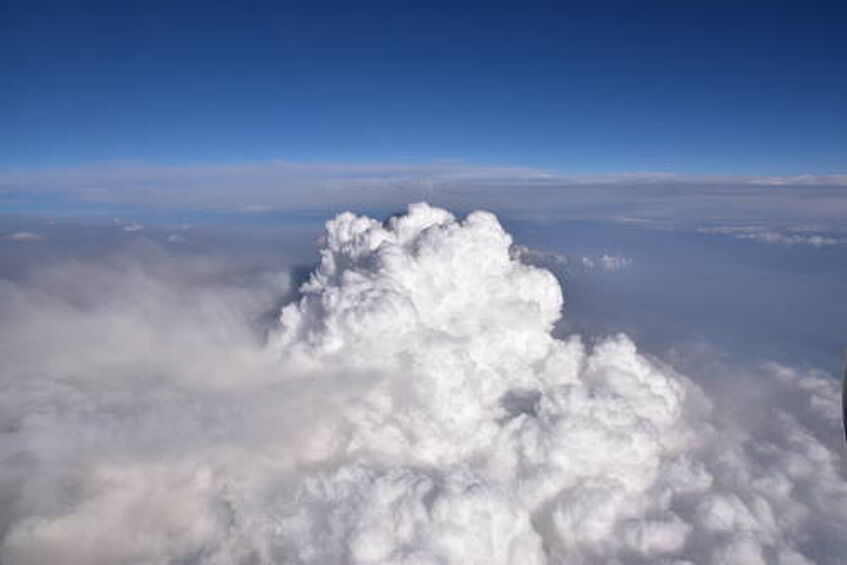
©Uni Wien/Weinzierl
As of January 2021, the University of Vienna and the Central Institute for Meteorology and Geodynamics (Geosphere, ZAMG at that time) are jointly founding the Vienna Network for Atmospheric Research to bundle and intensify research.
"The urgency of the climate crisis demands a deeper process understanding of the entire climate system," explains Andreas Stohl, co-director of the new atmospheric and climate research network. Stohl, representing the Institute of Meteorology and Geophysics at the University of Vienna, leads the initiative alongside Gerhard Wotawa from Geosphere Austria. Their ambitious vision is clear: to position Vienna as a leading research location in this critical domain. Although recent years have seen rapid development in areas such as greenhouse gas analysis, aerosol dynamics, and advanced meteorological models, global warming continues to raise complex, evolving questions that require immediate scientific focus.
The foundation for Vienna's meteorological prominence was laid in 1851 with the establishment of ZAMG, one of the world’s oldest state weather services. Its first director, Karl Kreil, simultaneously held the chair of physics at the University of Vienna. This early, close collaboration between the two institutions propelled Vienna to become a global leader in meteorology during the late 19th and early 20th centuries. "With VINAR, we aim to revive this successful era and once again establish Vienna as a beacon of atmospheric research," explains meteorologist Andreas Stohl. Stohl, a recipient of the Gottfried and Vera Weiss Prize this year (2021), will co-lead the new network with Gerhard Wotawa, Division Manager for Data, Methods and Models at ZAMG.
VINAR's strategic focus over the coming years will be on driving fundamental research to enhance the jointly operated weather forecasting, climate, and dispersion models. Andreas Stohl likens the network's mission to providing a "turbo boost for atmospheric and climate research and meteorology."
Research infrastructure and knowledge generation
Gerhard Wotawa, Head of Research and Development at ZAMG, stresses that current challenges make it crucial to develop products and services that safeguard citizens and infrastructure. These offerings must be created at the cutting edge of research and tailored precisely to the needs of federal, provincial, and municipal governments, as well as the business community. He adds that VINAR's promotion of shared research infrastructures and joint knowledge generation will also significantly strengthen atmospheric and climate research across Austria.
The cooperation encompasses several key initiatives. This includes the development of methodologies for balancing greenhouse gas emissions using atmospheric measurements. Furthermore, the network plans to establish an in-situ measurement infrastructure for aerosol and cloud properties at two crucial locations: ZAMG’s Sonnblick Observatory and the University of Vienna's urban background station. Representing the University of Vienna, the VINAR team includes both the Institute of Meteorology and Bernadett Weinzierl, Head of the Aerosol Physics and Environmental Physics research group at the Faculty of Physics.
VINAR Director Receives Gottfried and Vera Weiss Prize
The further development of atmospheric dispersion models is also a focus of
In 2020, VINAR Director Andreas Stohl was awarded the €200,000 Gottfried and Vera Weiss Prize of the Austrian Science Fund FWF to support basic research in the field of meteorology. Stohl focuses on the further development of atmospheric dispersion models and secures funding for a Lagrangian re-analysis project in 2020. While conventional models record meteorological parameters such as humidity or temperature at fixed points, the so-called Lagrangian models follow the individual particles and record how the meteorological parameters change along their path. For questions such as the transport of pollutants and greenhouse gases or the origin of a heavy rain event, this method of analysis has clear advantages, Stohl said.
These models are also an important component of the new research network. After all, the model developed by Andreas Stohl is also used at Geosphere for crisis preparedness, for example after nuclear power plant accidents or volcanic eruptions.
Cooperation bundled and strengthened
"I am very pleased that the new research association will further strengthen climate and atmospheric research in general and also at our faculty," says Petra Heinz, Dean of the Faculty of Geosciences, Geography and Astronomy: "The cooperation with Geosphere, which has already been excellent, will thus be bundled and also put on a new organizational footing."
The University of Vienna has successfully utilized research networks to unite scientists across socially relevant fields and intensify their collaborative work. With the establishment of the Vienna Network for Atmospheric Research (VINAR), the university now operates eleven such networks, spanning topics from environmental and biographical research to gender studies.
VINAR’s mission is ambitious, encompassing not only atmospheric research but also the crucial advancement of weather forecasting and climate models, alongside the development of data science methodologies for analyzing large datasets ("big data").
Furthermore, the partnership between the University of Vienna and ZAMG extends deeply into teaching and academic training. Plans include establishing a comprehensive seminar program and jointly supervising doctoral candidates, leveraging platforms such as the Vienna International School of Earth and Space Sciences (VISESS) within the Faculty of Earth Sciences, Geography and and Astronomy at the University of Vienna.